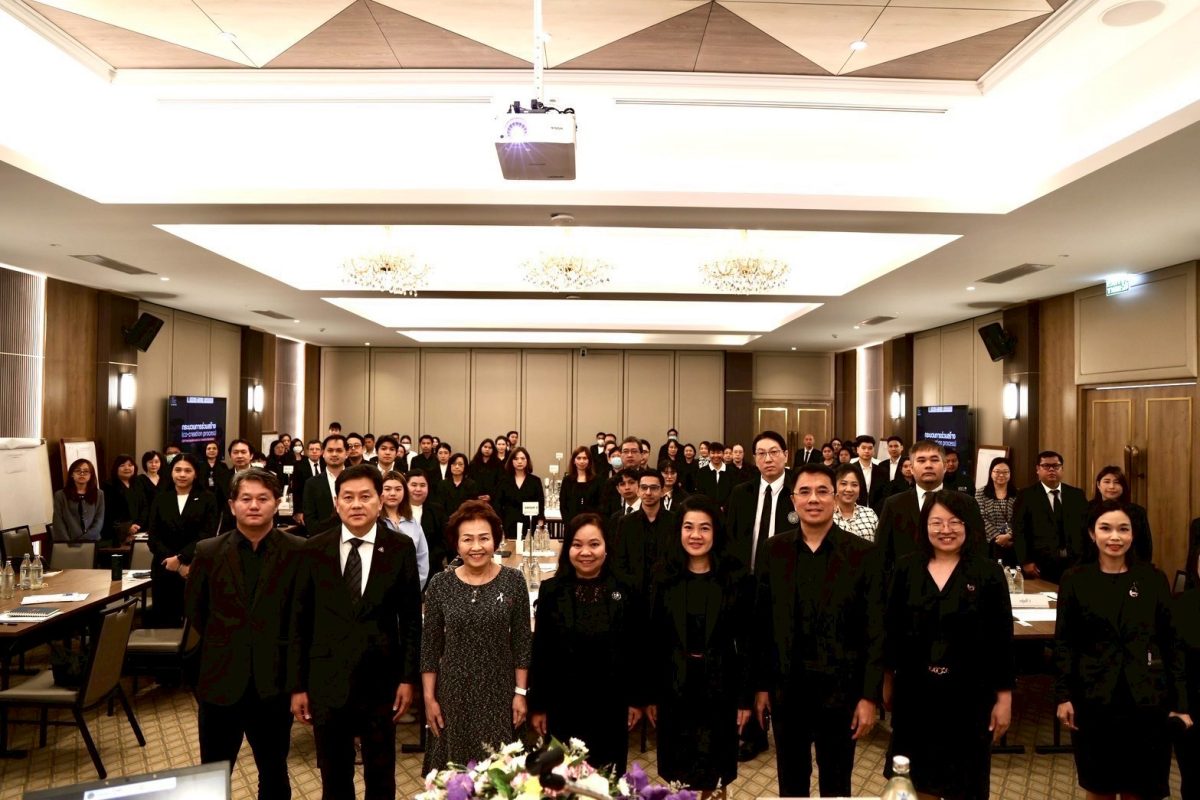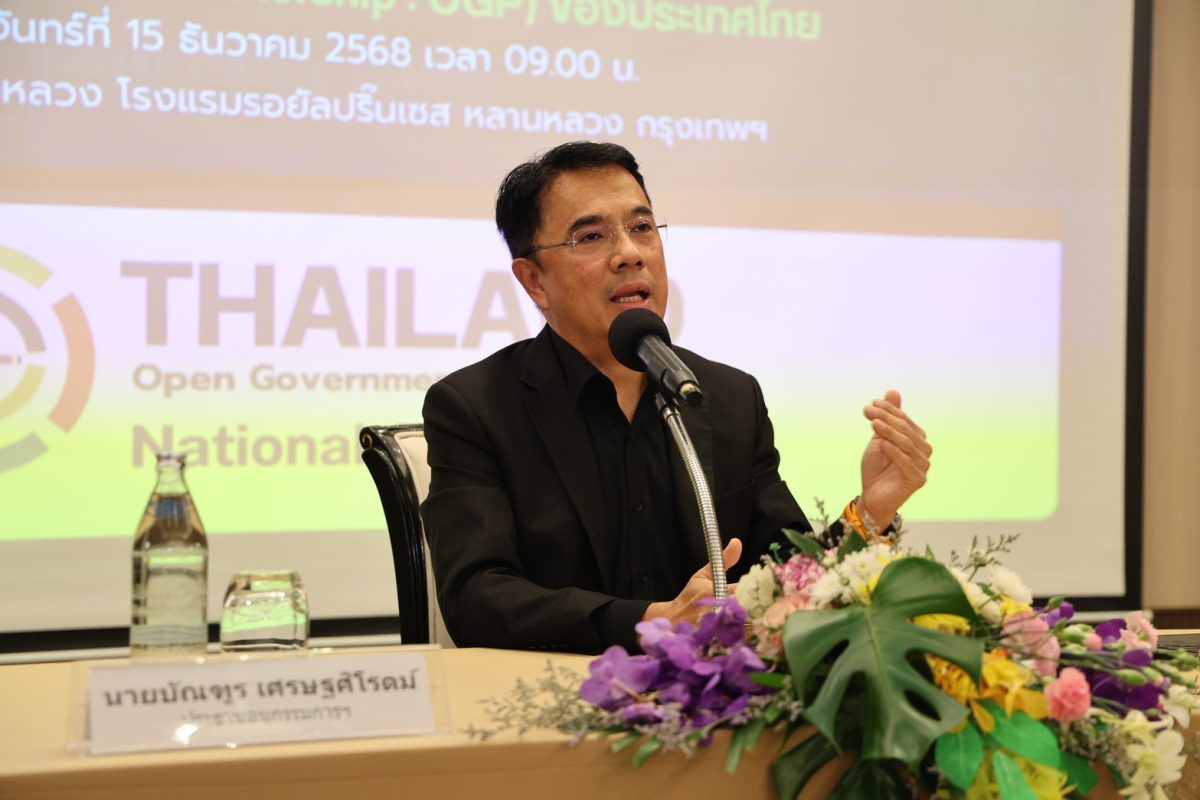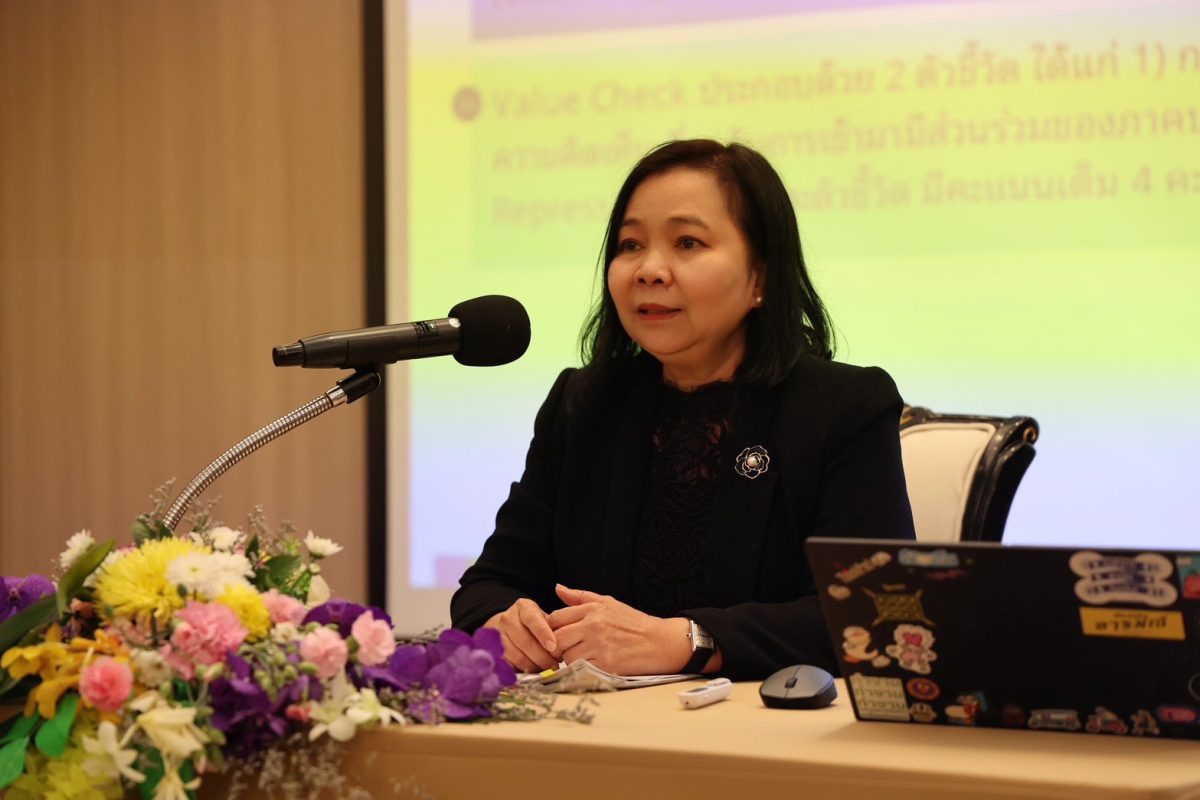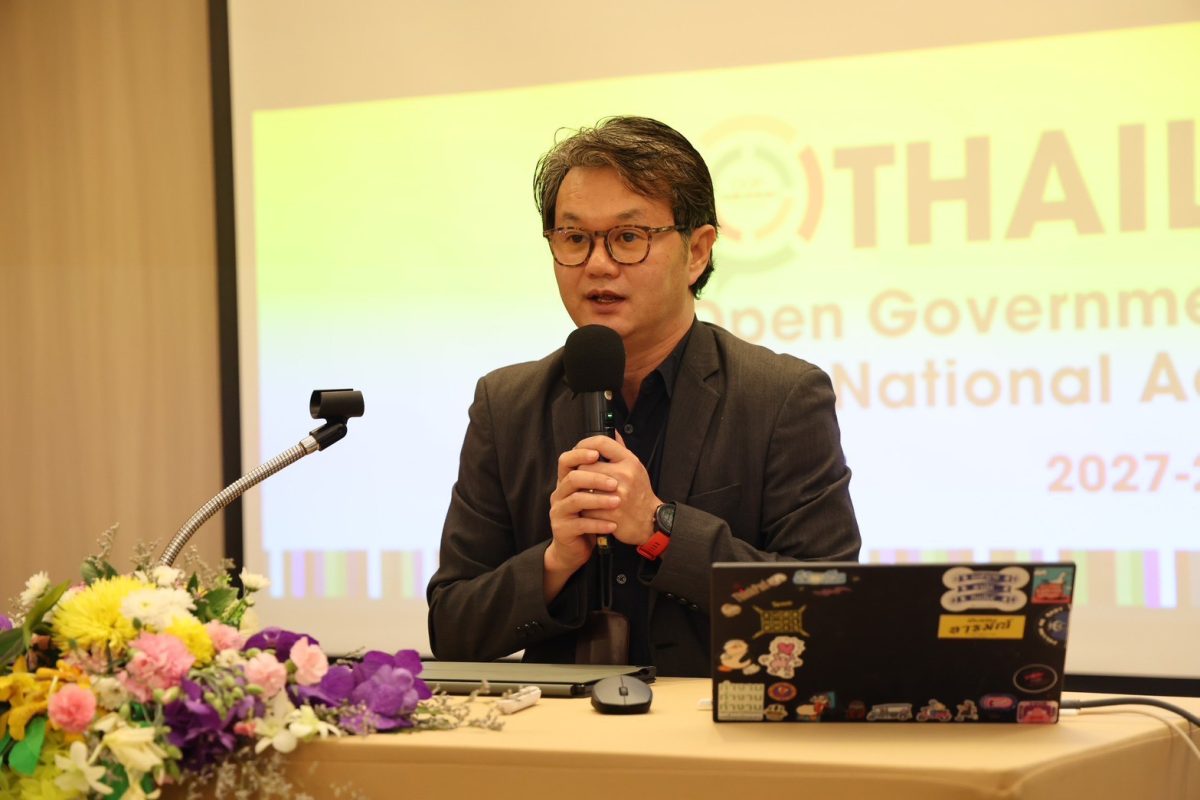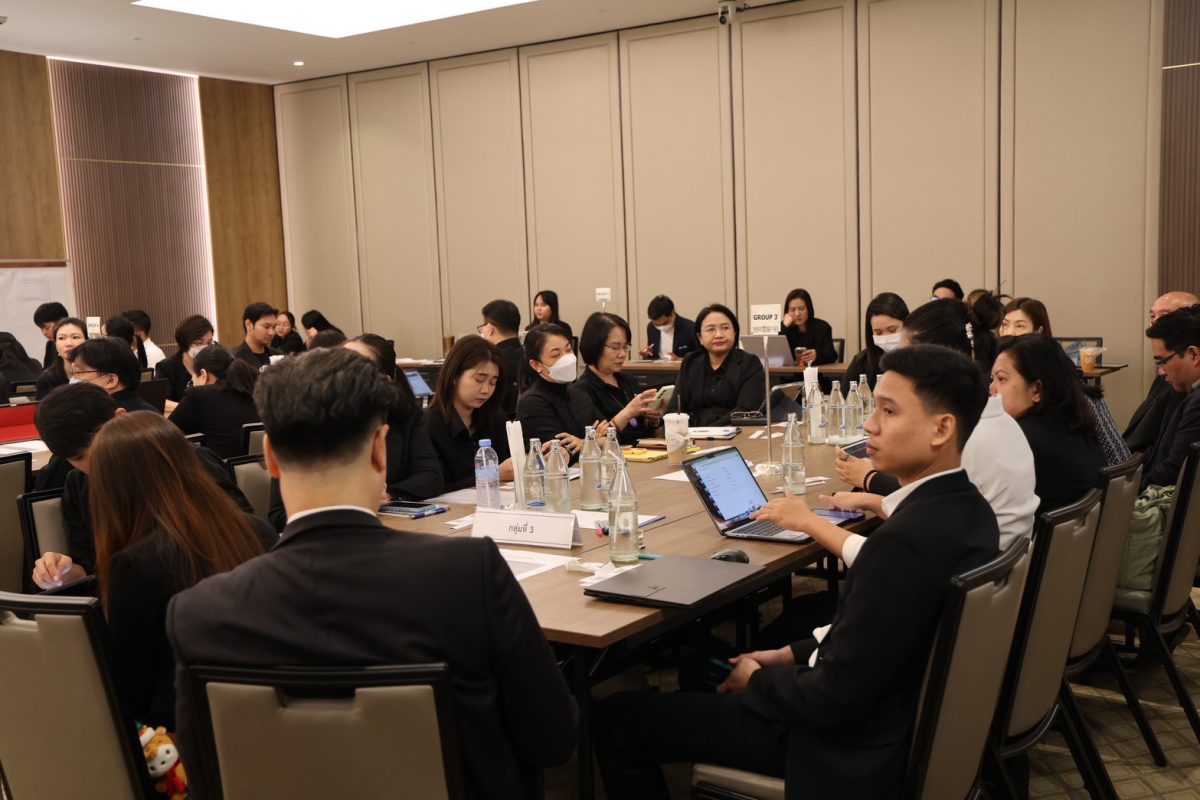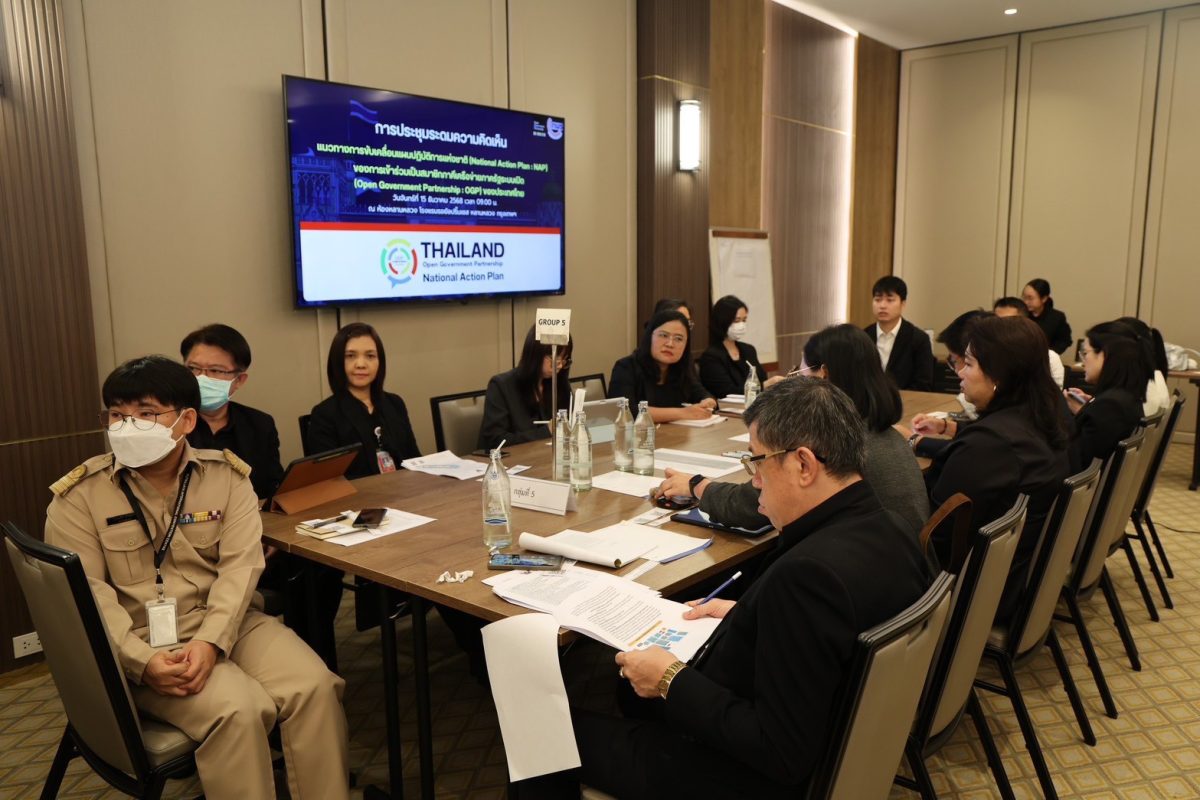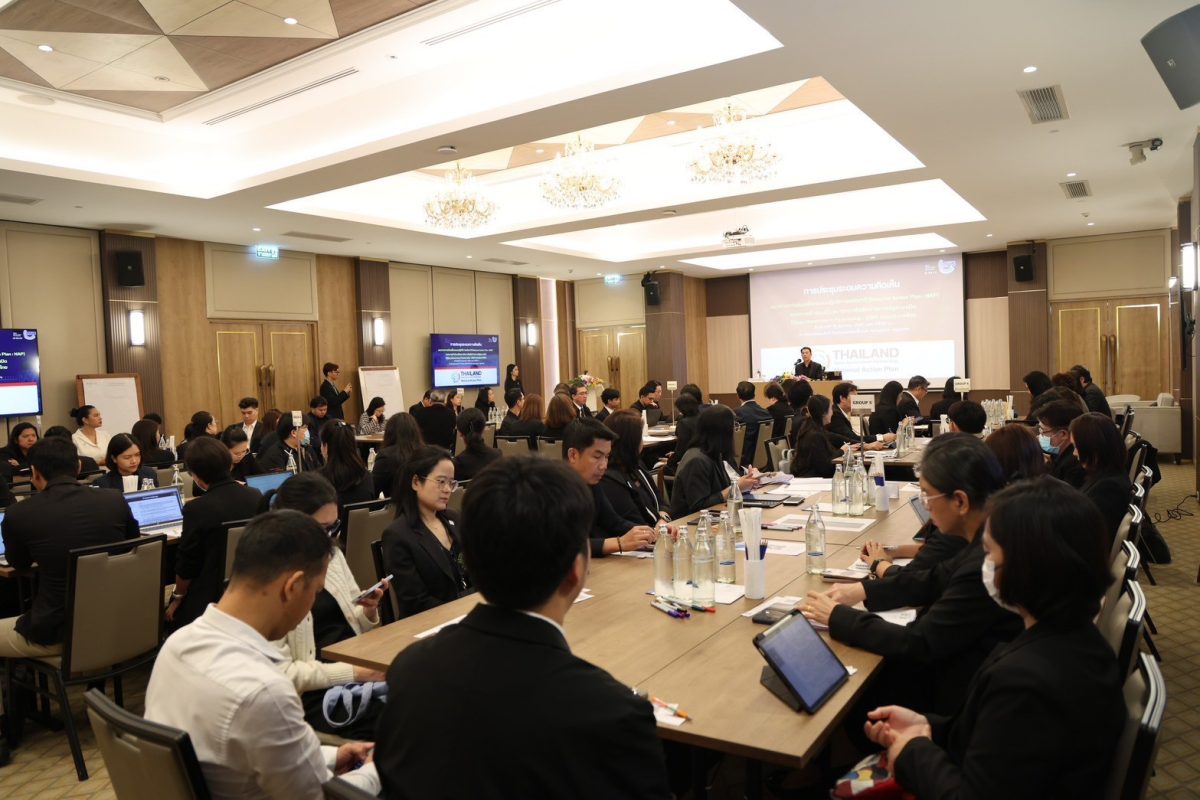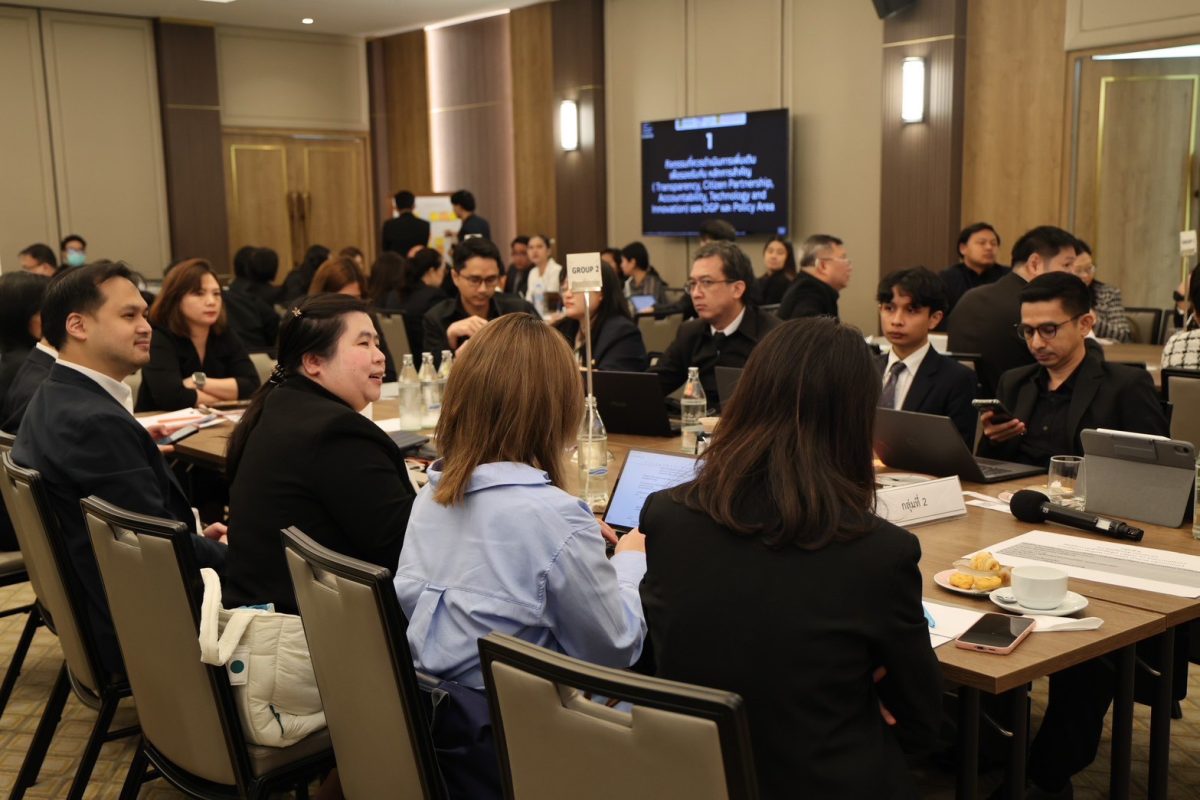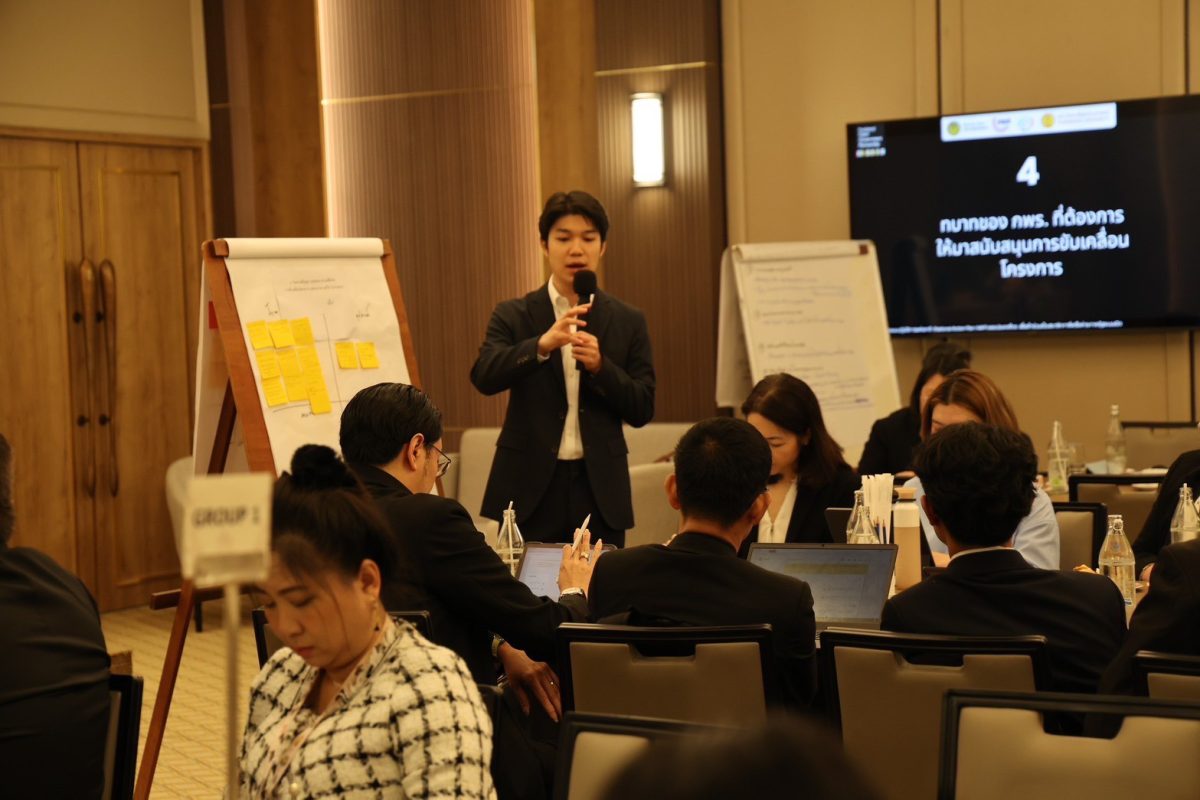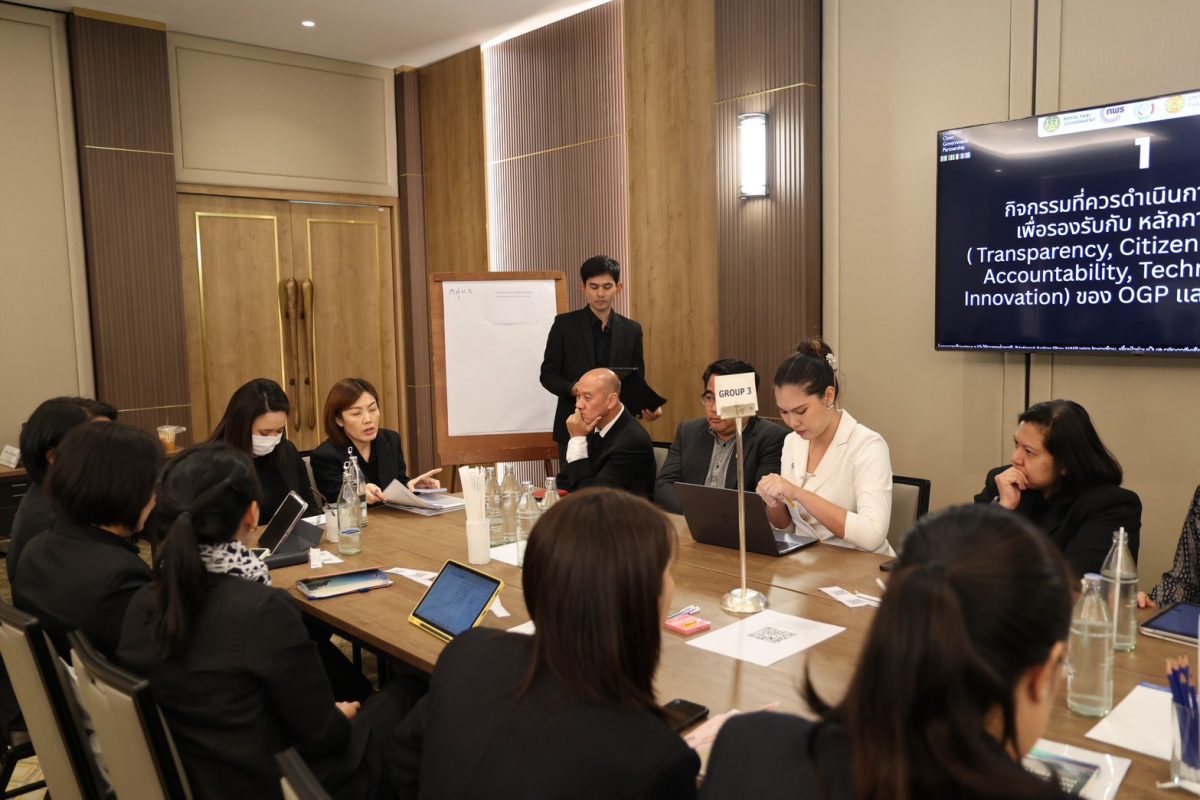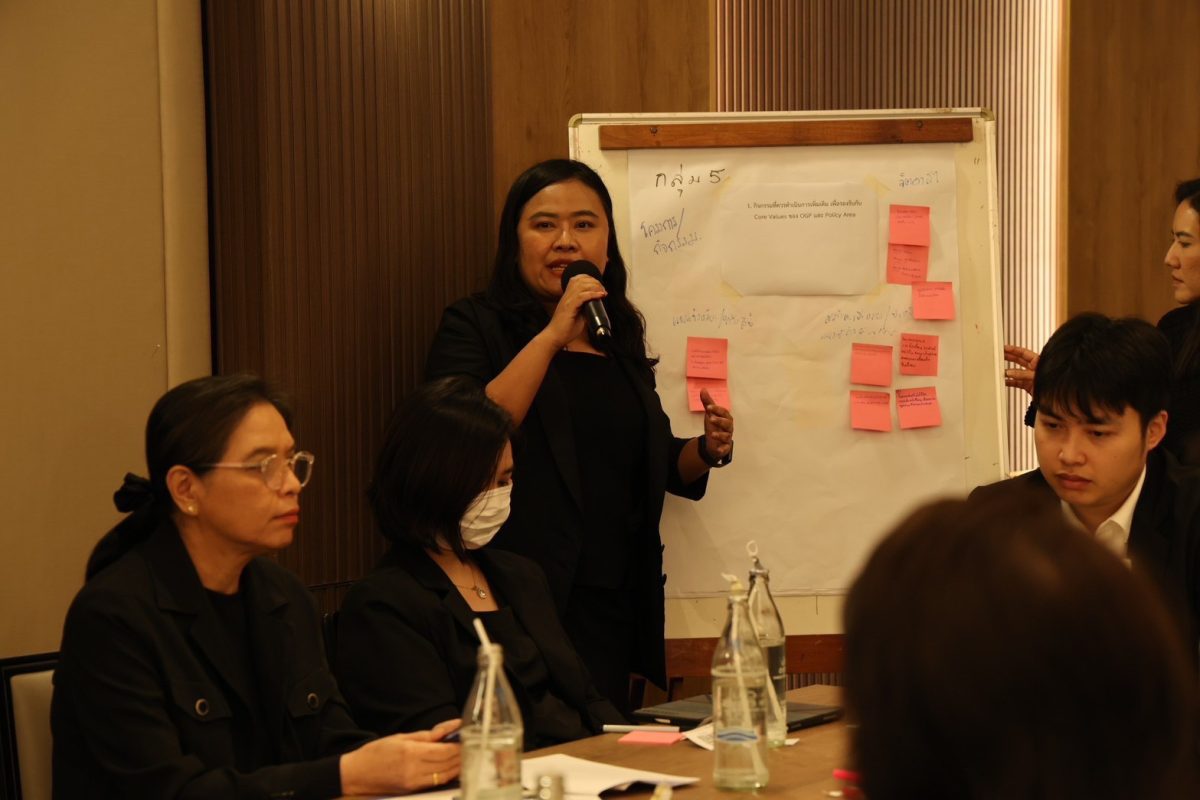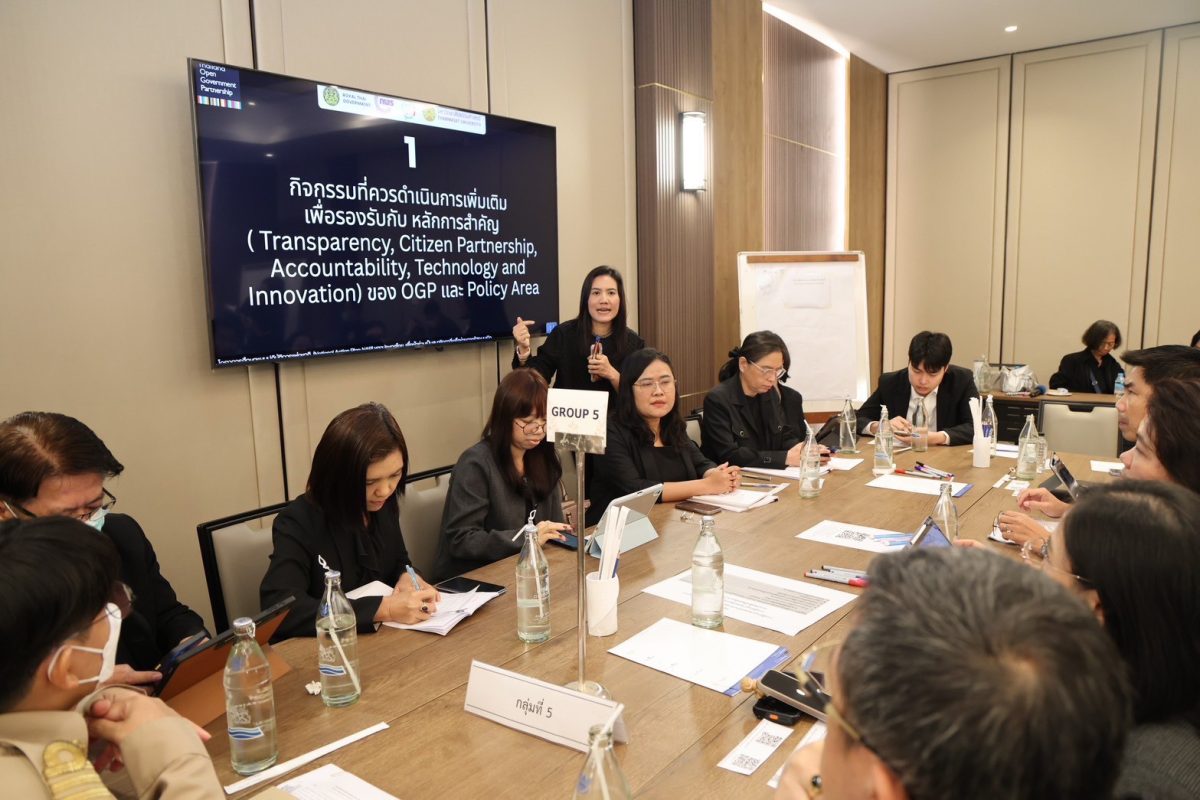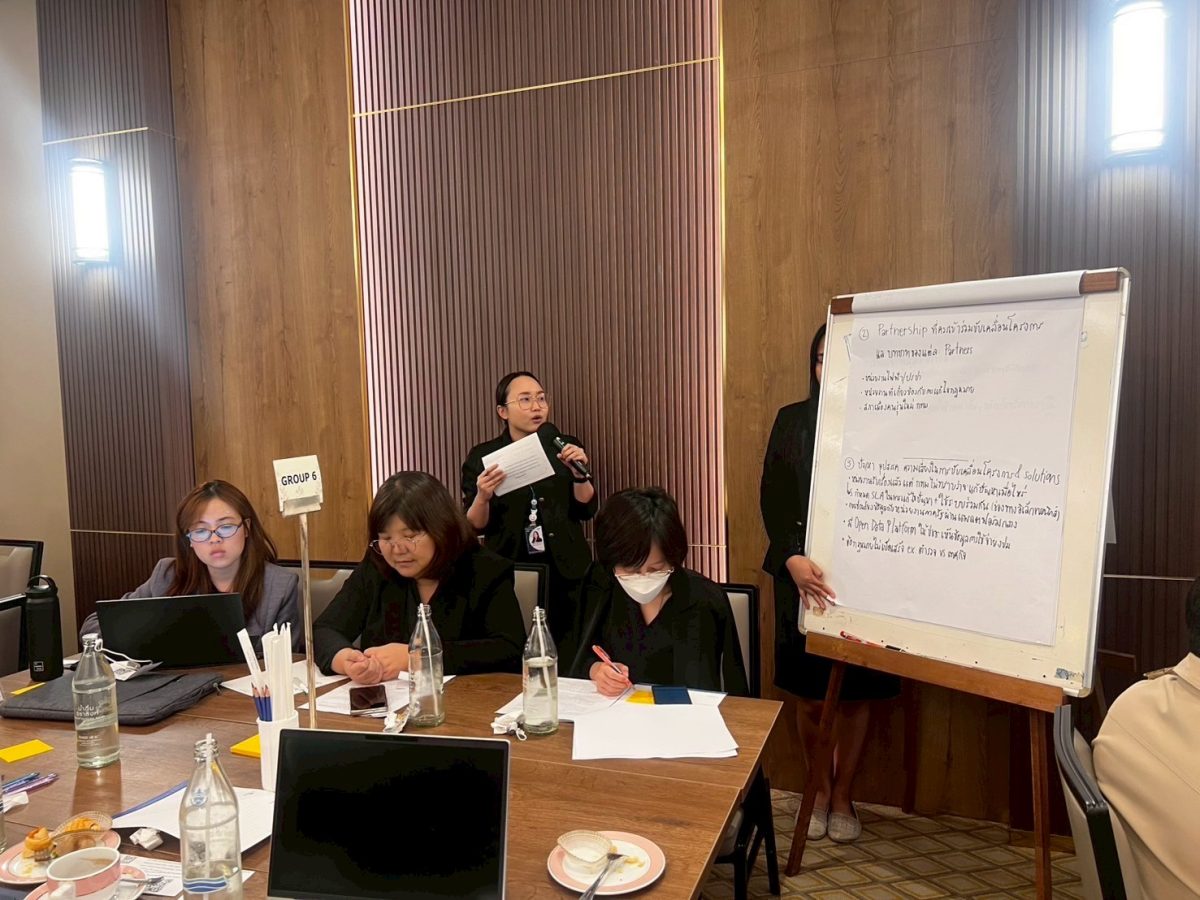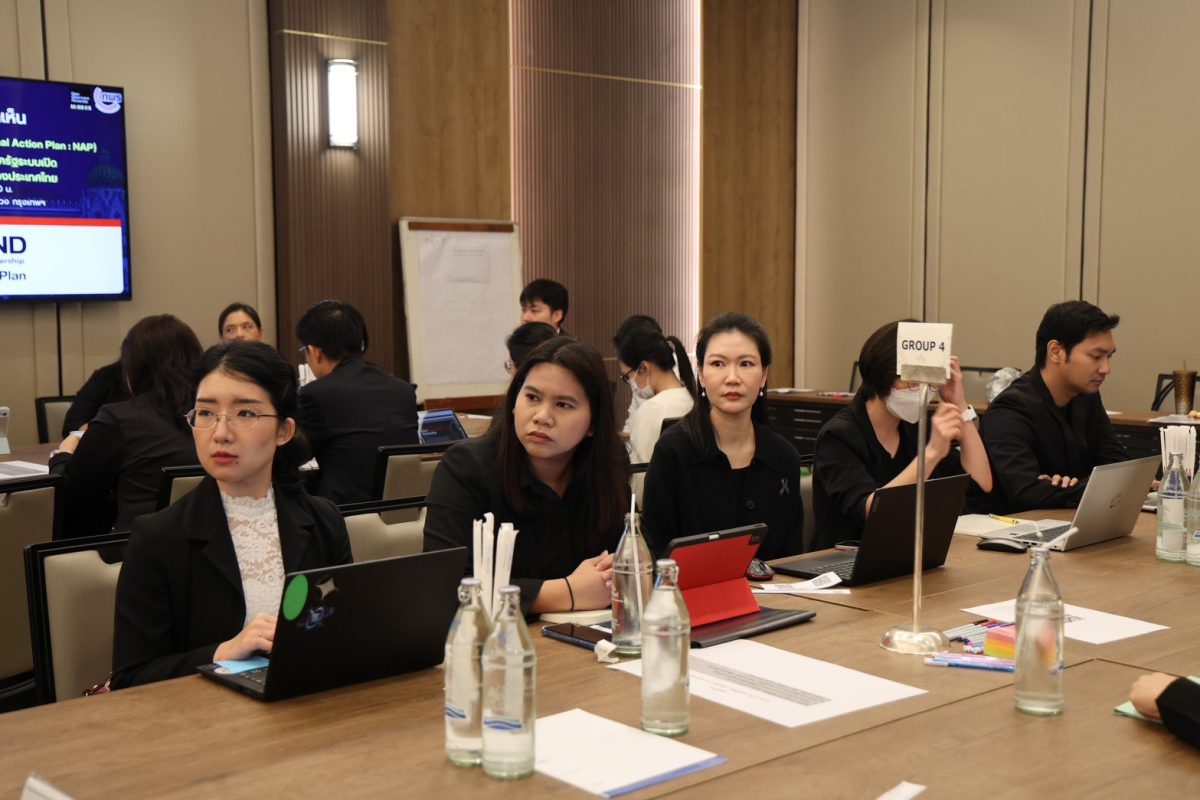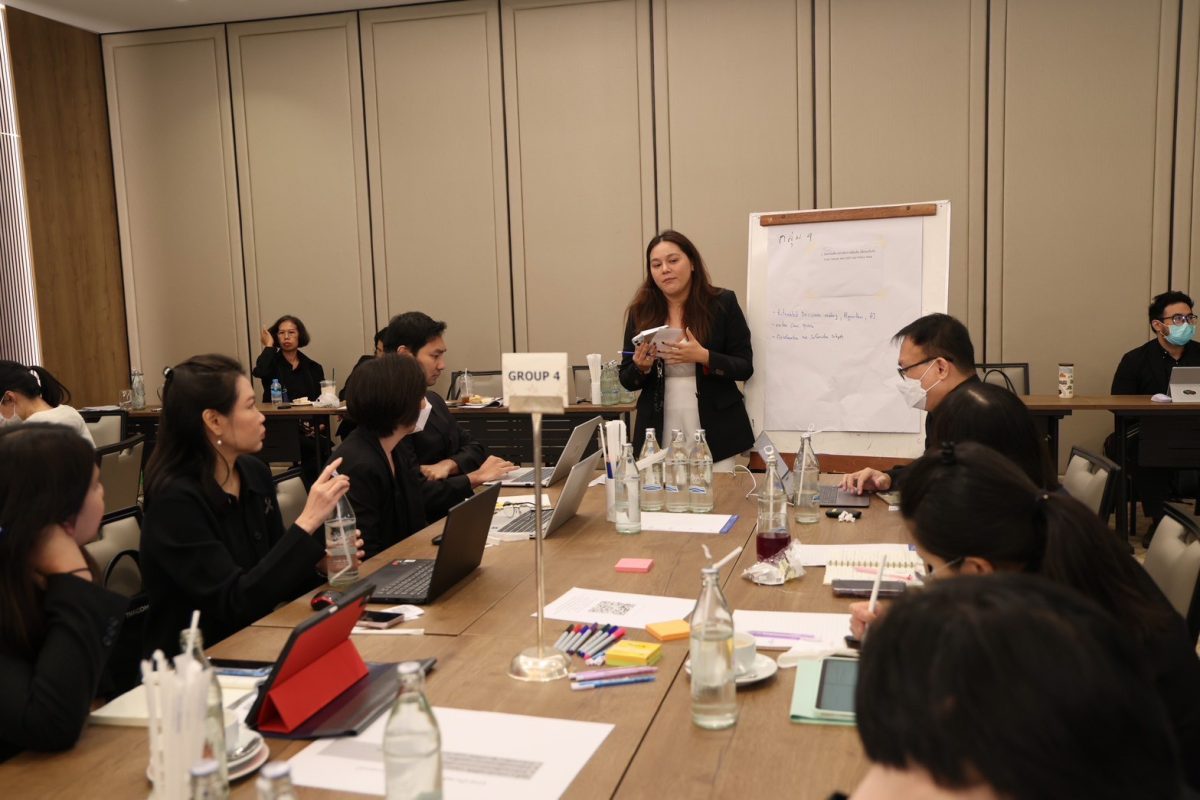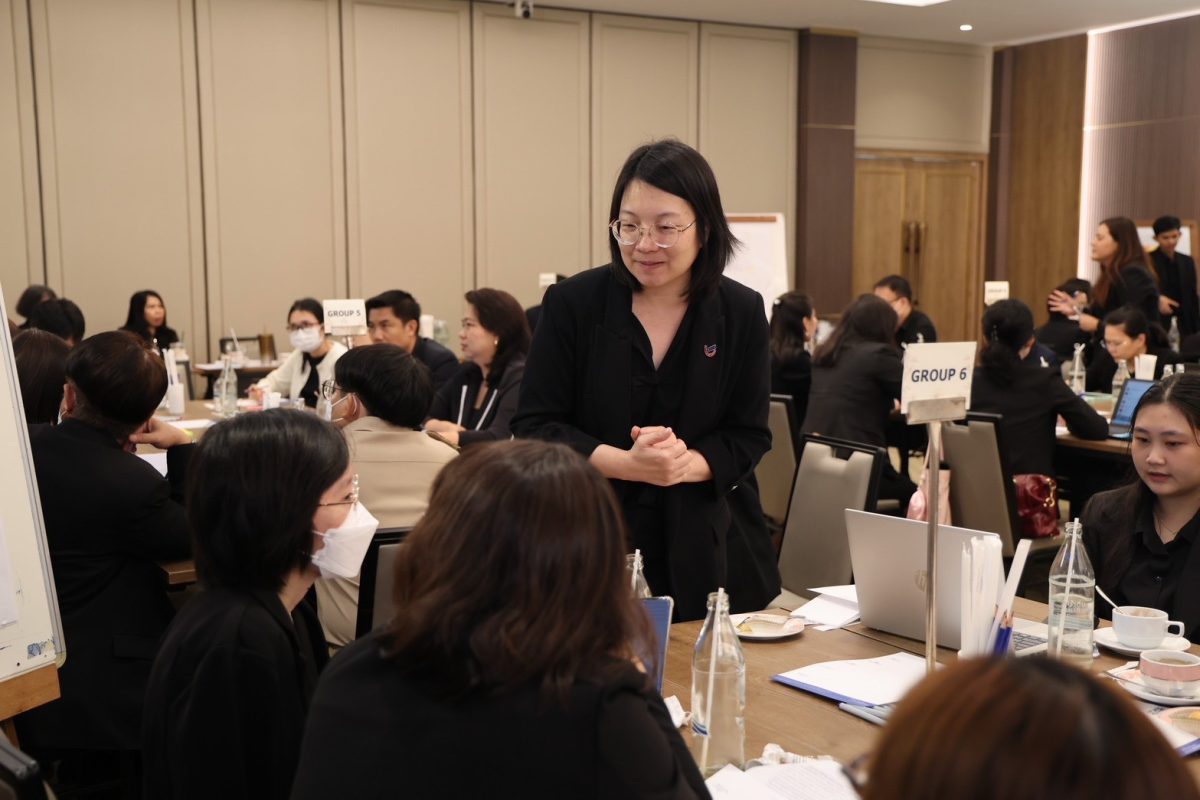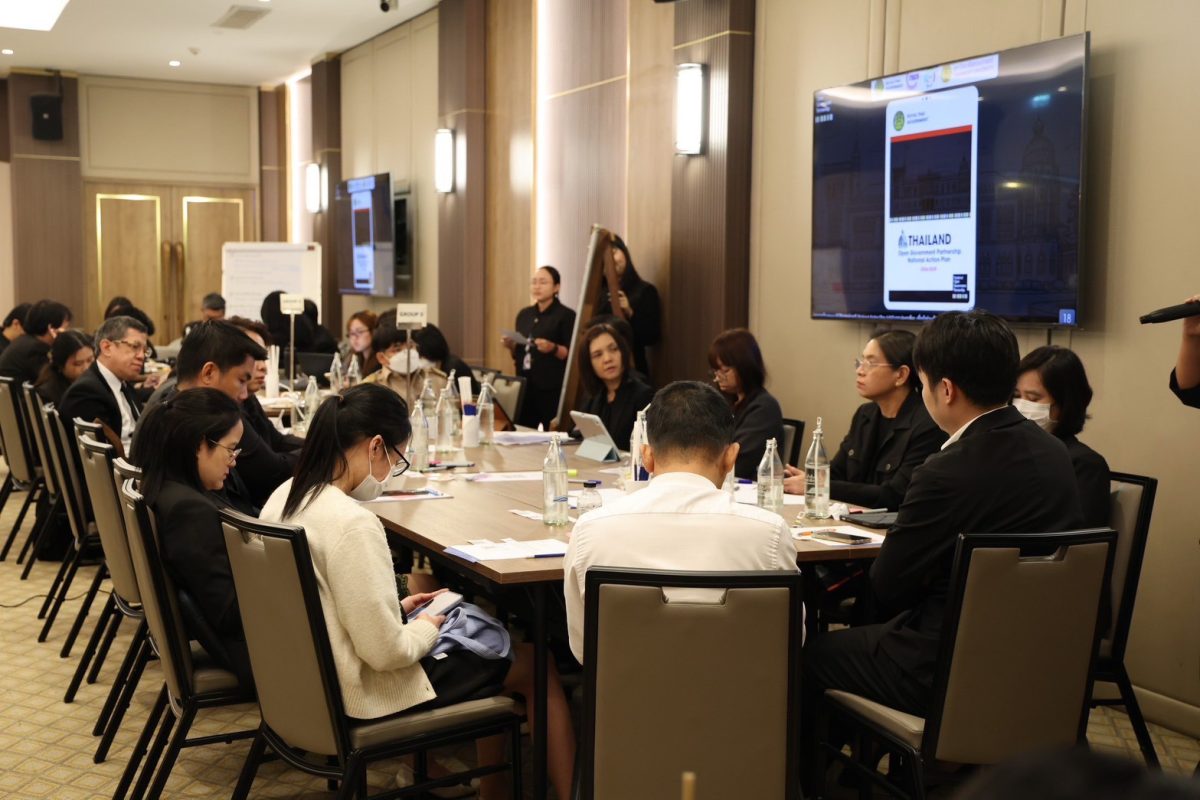
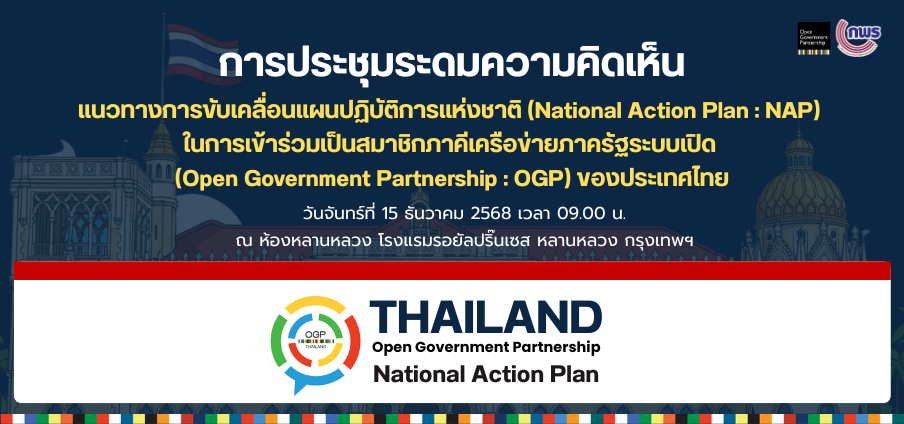
On Monday, 15 December 2025, the Office of the Public Sector Development Commission (OPDC) hosted a meeting to gather opinions on the direction of Thailand’s National Action Plan for the OGP membership at the Royal Princess Larn Luang Hotel, Bangkok. This meeting was chaired by Mr. Bandhoon Sethasirirot, Chairman of the OPDC’s Sub-Committee on Promoting Open Public Administration and Participation. Moreover, Ms. Areepan Charoensuk, Special Expert attached to the Office of the Prime Minister; Ms. Petcharat Eksangkul; Mr. Wiwat Hemmondarop, Vice President of the Federation of Thai Industries; Dr. Warirat Srisathitwatana, Board Member of the Thai Chamber of Commerce; and representatives from government agencies, the private sector, and civil soceity attended the meeting. The key points are as follows:
 The objectives of the meeting were to clarify the key information of the Cabinet resolution regarding the preparation of the National Action Plan (NAP), to offer approaches from other countries and suitable methods for Thailand, and to collect opinions and suggestions from the government, private sector, and the public to determine the direction and content of the NAP to align with the country’s problems and context.
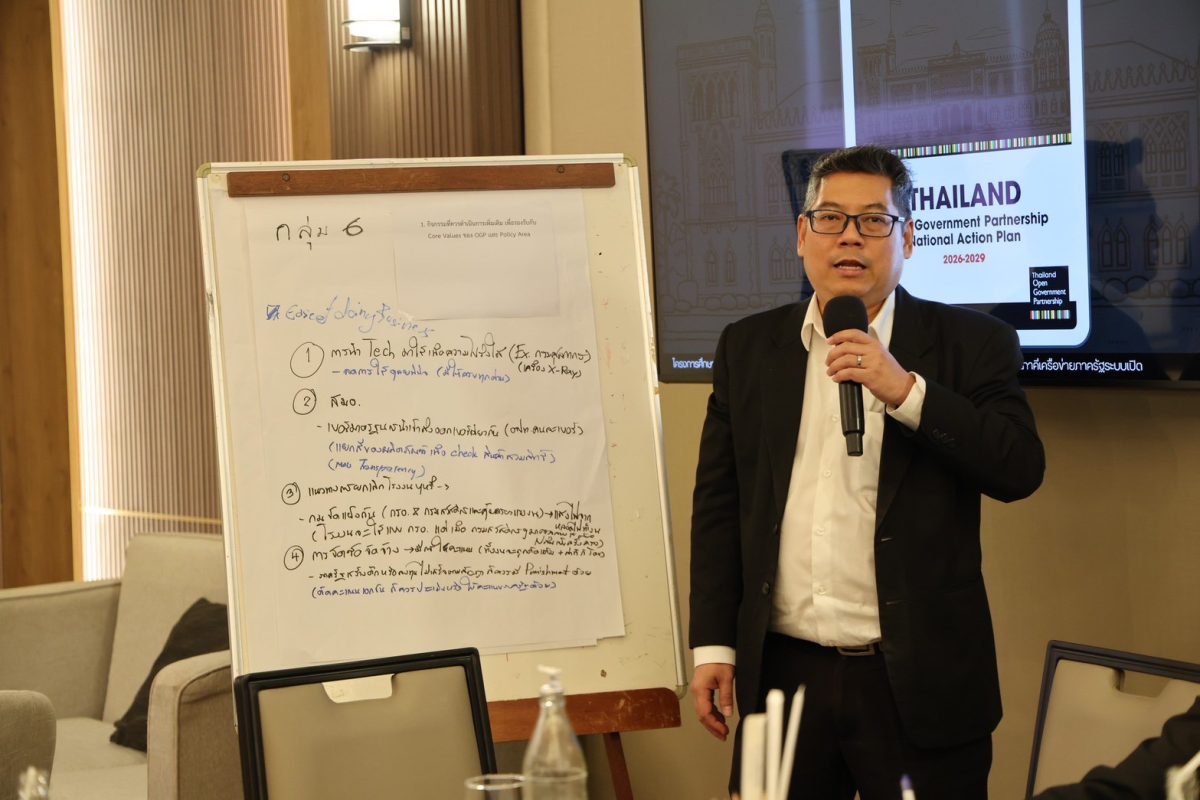
This brainstorming session reflected the views and suggestions of the meeting attendees, aligning with the basic principles of the OGP: transparency, public participation, and government accountability. The key points, condensed into four main areas, served as a guideline for brainstorming and identifying the implementation of the National Action Plan (NAP), as follows:
(1) Projects or activities that should be implemented or should be proceeded further: The consensus came out that the aims should be on projects that carry out systemic change or are game-changers, such as the use of digital technology and AI to increase transparency and reduce official discretion, the development of a central data platform and open government data disclosure by default, as well as projects that induce opportunities for concrete public participation in policy making and problem-solving at the local level.
(2) Partnerships that should take part in: It is advised to clearly determine the lead agency and supporting agencies, and to open up opportunities for cooperation with civil society, the private sector, and local administrative organizations in the form of a network to integrate work, reduce duplication, and create shared ownership, particularly in cooperation on data, technology, the environment, and anti-corruption.
(3) Analysis of problems, obstacles, and solutions: Common issues identified include the fragmented work of government agencies, disconnected data standards, outdated regulations, and planning, budgeting, and performance indicators that hinder integrated work. Proposed solutions include amending obstacle regulations, utilizing technology to unlock structural challenges, and designing more efficient inter-agency collaboration mechanisms.
(4) The role of the Office of the Public Sector Development Commission (OPDC) in supporting the implementation: Participants agreed that the OPDC should play a key intermediary role in supporting the implementation of the NAP, such as pushing for policy changes through Cabinet resolutions, adjusting Key Performance Indicators (KPIs) to be more flexible and conducive to collaborative work in the form of “Joint KPIs,” supporting the amendment of regulations that are obstacles, and linking various agencies to enable integrated work within the OGP framework in a tangible way.
 During the meeting’s conclusion, the Chairman of the OPDC’s Sub-Committee on Promoting Open Public Administration and Participation emphasized that the OGP action plan must focus on selecting “leverage points” or game changers that create a high-impact systemic shift in each area. This could involve using digital technology or amending specific regulations to unlock the entire system, while simultaneously designing an “ecosystem” that supports driving change. Furthermore, it requires adjustments to organizational structures, laws, incentives, and joint key performance indicators (KPIs) to ensure integrated work among agencies and achieve genuine transformation in accordance with OGP principles.
 NEXT STEP: The Office of the Public Sector Development Commission (OPDC) has informed agencies to take the basic principles of the OGP into consideration and the results of initial consultations regarding projects that should be included in the National Action Plan (NAP). Details of these projects must be submitted to the OPDC by early January 2026 to be utilized as supporting information for analysis and the development of the NAP in accordance with Thailand’s OGP mandate in the next step.